
by michael kimmel
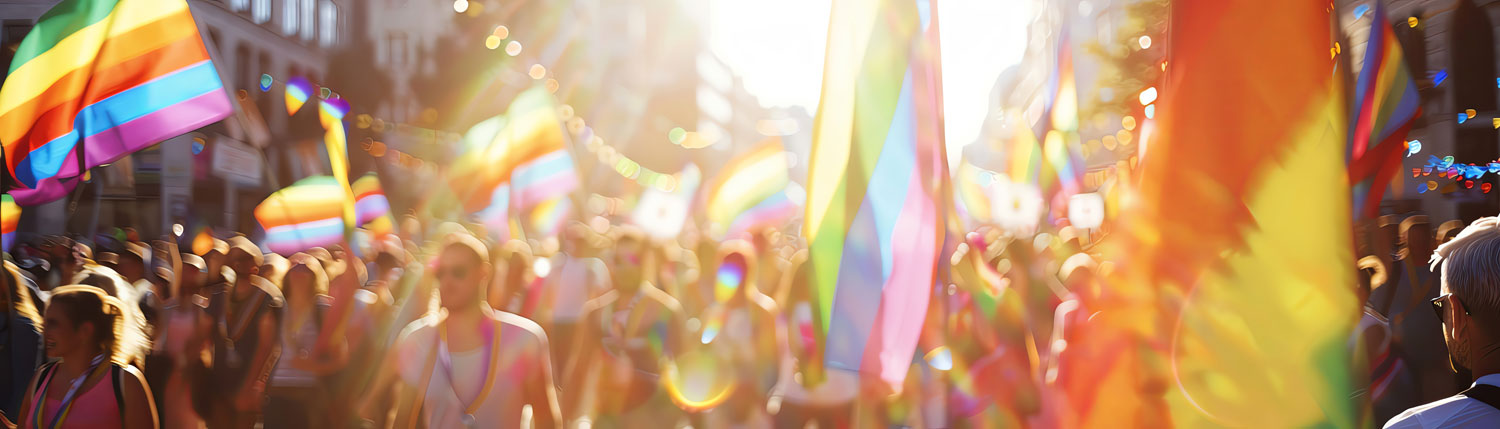
San Diego’s annual Pride Parade began in 1974, when a small group of gays and lesbians paraded without a permit — marching on sidewalks and stopping for red lights to avoid confrontation with the police department. Activists Jess Jessop and Tom Homann had gone to police headquarters to request a permit, but the sergeant-in-charge told them, “There will never be a homosexual Pride march in this city. You guys are deviants and queers, and if you don’t get out of here, we will arrest you.”
Not a great start.
But, in 1975 — the year I graduated from college — San Diego gays again applied to the police department for a parade permit. This time they got one, and on June 28, 1975, about 400 queer folk marched from Hobo Park to Balboa Park, marking the first official Pride Parade and Rally.
It was the start of annual celebrations of queerness. The parades have grown exponentially: In the 1980 parade, there were about 700 participants. In 1997, there were about 100,000; in 2018, about 300,000. (Thanks to Lillian Faderman for this bit of queer history.)
Representatives of the San Diego Police Department — which had long evoked fear and loathing among gay people — marched, in uniform and with friendly smiles, in the 1991 Pride Parade. In 1992, Police Chief Bob Burgreen placed himself at the head of the police contingent in the Parade.
As the 2025 San Diego Pride approaches, it’s a challenging time to be queer in the world. Some of the justices on the United States Supreme Court have mumbled about reversing same-sex marriage, like they did with a woman’s right to choose. Trump wants to defund anything queer-oriented, and has a special desire to disempower transgender people.
It’s a rough time, in some ways, and yet we celebrate. Why? Because we can! And why should we let the homophobes of the world drag us down to their level of fear and hate?
“It’s a rough time, in some ways, and yet we celebrate. Why? Because we can! And why should we let the homophobes of the world drag us down to their level of fear and hate?”
My first Pride parade was in 1980 in NYC: I was 27 and going to Studio 54 on a regular basis. I wasn’t really “out,” but everyone who knew me certainly suspected. I was in a rock band — the only queer member — and we rehearsed from midnight to 3 a.m. in a dumpy rehearsal space off Times Square. I was doing temp work at law firms to pay the bills.
My first Pride parade terrified me. I didn’t know what to make of it. It was sure different from Wellington, Ohio, where I grew up. So many happy people! They were like people from another planet. Still closeted, I watched the parade with some straight friends. They enjoyed it more than I did: There was nothing at stake for them.
I wanted to come out, but was raised in such a homophobic environment that I had no idea who I’d be and how the world would treat me. As a kid, my family made fun of Truman Capote and Liberace when they appeared on TV. At school, I was called homo, fag or — the worst — “Michelle” by the popular boys. I hated myself for being attracted to them.
At NYC Pride 1980, as thousands of queer folks surrounded me, I felt hope: “Maybe, just maybe, I could come out too?” (Note the question mark.) Maybe some of these people used to be like me: terrified and full of self-loathing.
It was a start. A spark.
It took me three more years, but, eventually, I came out to myself and the men’s support group I went to. Most of the other guys were straight, but they were so happy when I came out to them.
“You weren’t surprised?” I asked them.
“No, Michael. We knew.”
“Then why didn’t you say something?”
“It’s your life; you decide when you’re ready to tell us. We can wait.”
And they did.
And I did.
And at the age of 30, I came out. Trembling, timid and hesitant . . . but “out” nonetheless. That was 42 years ago.
So, as you go to Pride events this year, please remember that there may be a terrified person at the back of the crowd who is trying to muster the courage to come out. Give them a smile. Send them some good energy. Who knows? Maybe they’re right on the cusp and your kindness will make all the difference.
Happy Pride!
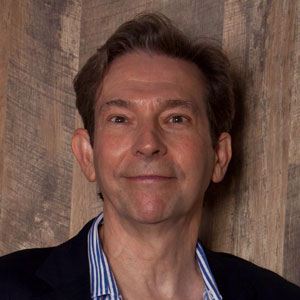 Michael Kimmel, a California-licensed psychotherapist (LCSW 20738), operates a private practice in San Diego, offering telehealth services throughout California. With over 25 years of counseling experience, he brings warmth, insight and a healthy sense of humor to his work. He accepts TriWest Insurance for California veterans. lifebeyondtherapy.com or 619-955-3311